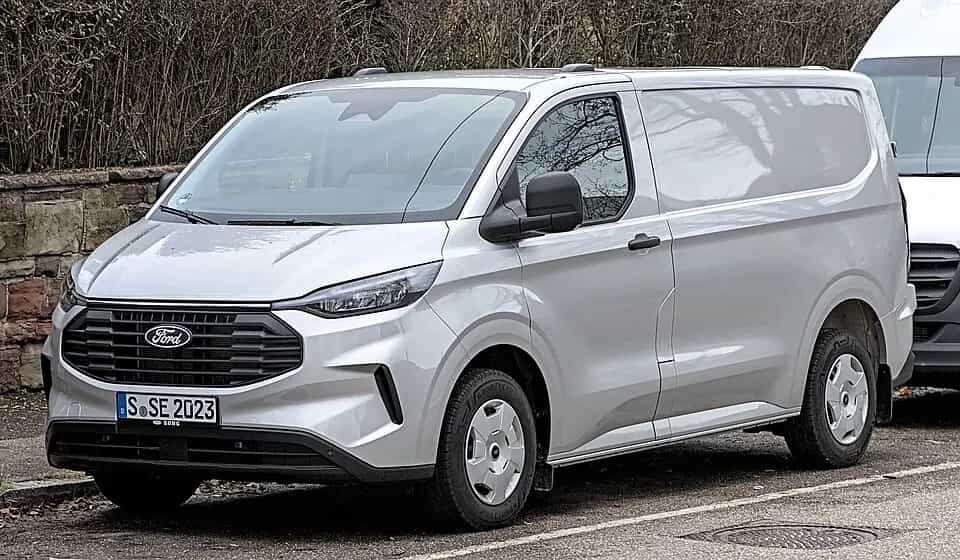
Ford Transit Van
Importing a used Ford Transit Van from the USA
The American Ford Transit is a different animal from the European one. Since 2015 it has been built in Kansas City, Missouri for the North American market, offered in a wide range of roof heights, lengths and weight ratings, and powered by big petrol V6 engines rather than the small diesels common in Europe. That makes a used US Transit interesting for buyers who want a high-roof cargo van, a camper conversion base or a spacious crew hauler with strong petrol power. USCar Trader is an independent broker for used vehicles only: we verify, source and ship, we do not sell new vans and we take no vehicle margin. Origin is marked neutral for this model, which simply means duty depends on the actual build plant shown by the VIN — US-built Kansas City vans can support 0% duty, but it must be proven, never assumed.

Generations at a glance
Ford replaced the long-serving E-Series (Econoline) with the global Transit for the 2015 US model year. The current generation received a substantial update for 2020, adding a new engine line-up, an available all-wheel-drive system and a 10-speed automatic. The fully electric E-Transit joined the range in 2022. Throughout, the platform architecture stayed constant: front-engine, rear- or all-wheel drive, with three roof heights (low, medium, high), three body lengths and three nominal weight classes marketed as T-150, T-250 and T-350.
Powertrain lineup
Early 2015–2019 US Transits offered a 3.7-litre Ti-VCT V6, a 3.5-litre EcoBoost twin-turbo V6 (around 310 hp) and, notably, a 3.2-litre Power Stroke five-cylinder diesel. From 2020 Ford dropped the diesel for North America and standardised on a 3.5-litre PFDI V6 (around 275 hp) with the 3.5 EcoBoost as the upgrade, both driving through a 10-speed automatic. Rear-wheel drive is standard; intelligent all-wheel drive is available on 2020-and-later vans. For import buyers this means most US Transits are petrol — a point to weigh against European fuel costs, but a strength for reliability and simplicity.
Trims in the US market
The Transit is sold as a Cargo Van, Crew Van and Passenger Van, but this page concerns the cargo configuration. Choose among low/medium/high roof, regular/long/extended wheelbase and T-150 through T-350 payload ratings. High-roof long-wheelbase cargo vans are the favourites for logistics fleets and campervan builders because you can stand upright inside and the load volume is generous. Options run from basic work-van spec to cars with cameras, adaptive cruise, heated seats and larger infotainment.
The used market stateside
Fleet turnover means a deep supply of used Transits in the States, from lightly used passenger vans to high-mileage delivery cargo vans. Typical import candidates are three to eight years old; commercial vans can show substantial mileage, so service history and drivetrain condition matter far more than the odometer alone. Dry southern and western vans offer the cleanest, rust-free undersides, which pays off at TÜV time. We screen on condition and documentation and do not quote Euro prices here.
Who should import one
A used US Transit suits campervan converters who want a tall, wide petrol platform, tradespeople who prefer a simple V6 over a modern turbo-diesel, and anyone chasing a specific high-roof extended layout that is scarce or expensive locally. If your route is long-distance motorway work where diesel economy dominates the sums, the petrol V6 will cost you at the pump — so run the numbers honestly before importing.
Key specifications
| Item | Detail (2020+ US Transit, typical) |
|---|---|
| Body style | Cargo van, 3 roof heights / 3 lengths |
| Base engine | 3.5 L PFDI V6, petrol |
| Optional engine | 3.5 L EcoBoost twin-turbo V6 |
| Base power | approx. 275 hp (202 kW) |
| EcoBoost power | approx. 310 hp (231 kW) |
| Transmission | 10-speed automatic |
| Drive | RWD standard, AWD optional |
| Earlier diesel (2015–19) | 3.2 L Power Stroke I5 |
| GVWR classes | T-150 / T-250 / T-350 |
| Max cargo volume (high roof, ext.) | approx. 15.1 m³ (487 cu ft) |
| Length (ext. LWB) | up to approx. 6,700 mm |
| Roof height (high) | interior standing height |
| Fuel | Petrol (regular); early diesel option |
| Assembly | Kansas City, Missouri, USA (verify by VIN) |
| Seating (cargo) | 2–3 up front |
How reliable is it?
The US Transit is generally durable, but there are patterns worth knowing. On EcoBoost V6 vans, cam-phaser rattle at cold start is the best-known complaint and can become a repair on higher-mileage engines. The 10-speed automatic occasionally shows harsh or hunting shifts that are often software-related; confirm the latest calibration. On the discontinued 3.2 Power Stroke diesel, watch for DEF/emissions system faults and injector issues that are expensive in Europe where parts are scarce — a strong reason many importers prefer the petrol vans. Across the range, check the rear axle, driveshaft centre bearing on long vans, and the usual heavy-use items: brakes, tyres, suspension bushings and body corrosion around door frames on northern vehicles. Reading up on Transit common problems for the specific engine you target is essential.
What US models do differently
US Transits use amber front markers, red rear turn signals, mph clusters and US lighting calibration; the diesel exhaust and emissions setup differs from EU-type approval. Petrol vans avoid the diesel emissions complexity entirely, which simplifies approval. Payload and weight ratings are stated to US standards, so the German registration weight class and driving-licence category (up to 3.5 t vs. above) must be checked against the exact van.
Seven steps to your import
The sequence is: (1) select a specific van to your roof/length/engine spec; (2) VIN and origin check to confirm Kansas City assembly and clean title; (3) escrow payment; (4) ocean freight (container or RoRo) to a port such as Bremerhaven; (5) customs clearance with origin evidence and import VAT; (6) technical inspection and individual approval (TÜV/§21); (7) registration and, for commercial use, entry in the vehicle register. We manage each step and the paperwork.
Customs, taxes and costs explained
Key point: duty depends on the plant of build; only a VIN check secures the 0% rate. Import VAT of 19% applies regardless.
Keep the two charges separate. EU import duty: under Regulations (EU) 2026/1455 and 2026/1461, a van of proven US origin shipped directly can attract 0% duty until 31 December 2029 — strictly with documented VIN/plant proof. Note that light commercial vehicles can fall under a different tariff line than passenger cars, so the classification is confirmed case by case; without valid origin proof the standard rate applies. German import VAT (Einfuhrumsatzsteuer) of 19% is always due on the customs value regardless of origin. We never say "duty-free" and add no margin to the van; you pay the vehicle, transport, statutory charges and our transparent fee.
German TÜV and registration
Expect to fit or code a rear fog lamp, adjust headlights for right-hand traffic, confirm DRLs and document the odometer in kilometres. Commercial vans may need partition, load-securing points or a converted interior documented if used as a camper — a camper (Wohnmobil) reclassification is a separate, well-trodden process at TÜV. Weight and axle-load plates must match the registration entry.
The buyer checklist
Confirm before purchase: the VIN matches the title and shows US assembly; a Carfax or AutoCheck history clear of salvage, flood or odometer issues; engine choice and its service record (cam phasers on EcoBoost, emissions on diesel); underbody and door-frame rust; transmission behaviour and latest software; complete maintenance records for a fleet-used van; and a clean, transferable title.
Questions and answers
Is the US Ford Transit built in America?
Yes, North American Transits are assembled in Kansas City, Missouri. That US origin can support 0% EU duty, but the individual VIN must confirm it before clearance.
Petrol or diesel — which US Transit should I import?
Most US Transits are petrol V6s, which are simpler to service and approve in Europe. The 2015–2019 3.2 diesel exists but brings emissions and parts headaches abroad.
Does the Transit have known problems?
EcoBoost cam-phaser noise and occasional 10-speed shift quality are the main petrol concerns; the older diesel adds DEF and injector risks. Documented service settles most of this.
How much import VAT will I pay?
German import VAT is 19% of the customs value and always applies, separate from any duty. Duty can be 0% only with proven US origin and correct classification.
Can a US Transit be registered as a camper in Germany?
Yes. A high-roof Transit is a popular camper base and can be reclassified as a Wohnmobil at TÜV once the conversion meets the criteria.
What driving licence do I need?
It depends on the van's permissible gross weight. Vans over 3.5 t require the appropriate licence category, so check the exact rating before buying.
Does high mileage rule a cargo van out?
No. Commercial vans routinely show high mileage; documented maintenance and drivetrain health matter more than the odometer.
See more in the Ford in the Carhub, compare it with the RAM ProMaster Cargo Van, the Mercedes-Benz Sprinter Cargo Van or the Chevrolet Express Cargo, and browse current Transit Van listings.